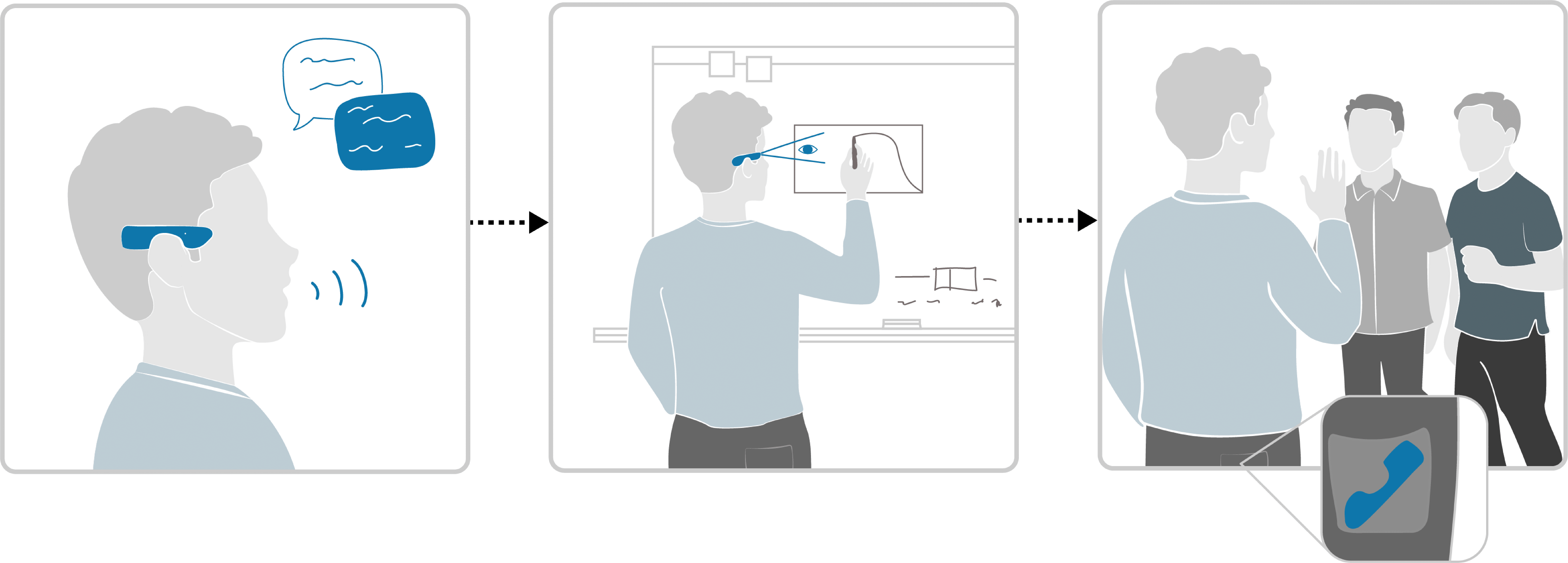
Wearable AI is often designed as always-available, yet continuous availability can conflict with how people work and socialize, creating discomfort around privacy, disruption, and unclear system boundaries. This paper explores episodic use of wearable AI, where assistance is intentionally invoked for short periods of focused activity and set aside when no longer needed, with a form factor that reflects this paradigm of wearing and taking off a device between sessions. We present The Pen, an ear-worn device resembling a pen, for episodic, situated cognitive assistance. The device supports short, on-demand assistance sessions using voice and visual context, with clear start/end boundaries and local processing. We report findings from an exploratory study showing how layered activation boundaries shape users' sense of agency, cognitive flow, and social comfort.
An ear-worn wearable that resembles a pen or pencil, designed for hands-free interaction during focused work episodes. Users put the device behind their ear at the start of a task and remove it when done — using the act of wearing to clearly mark the beginning and end of an assistance episode.
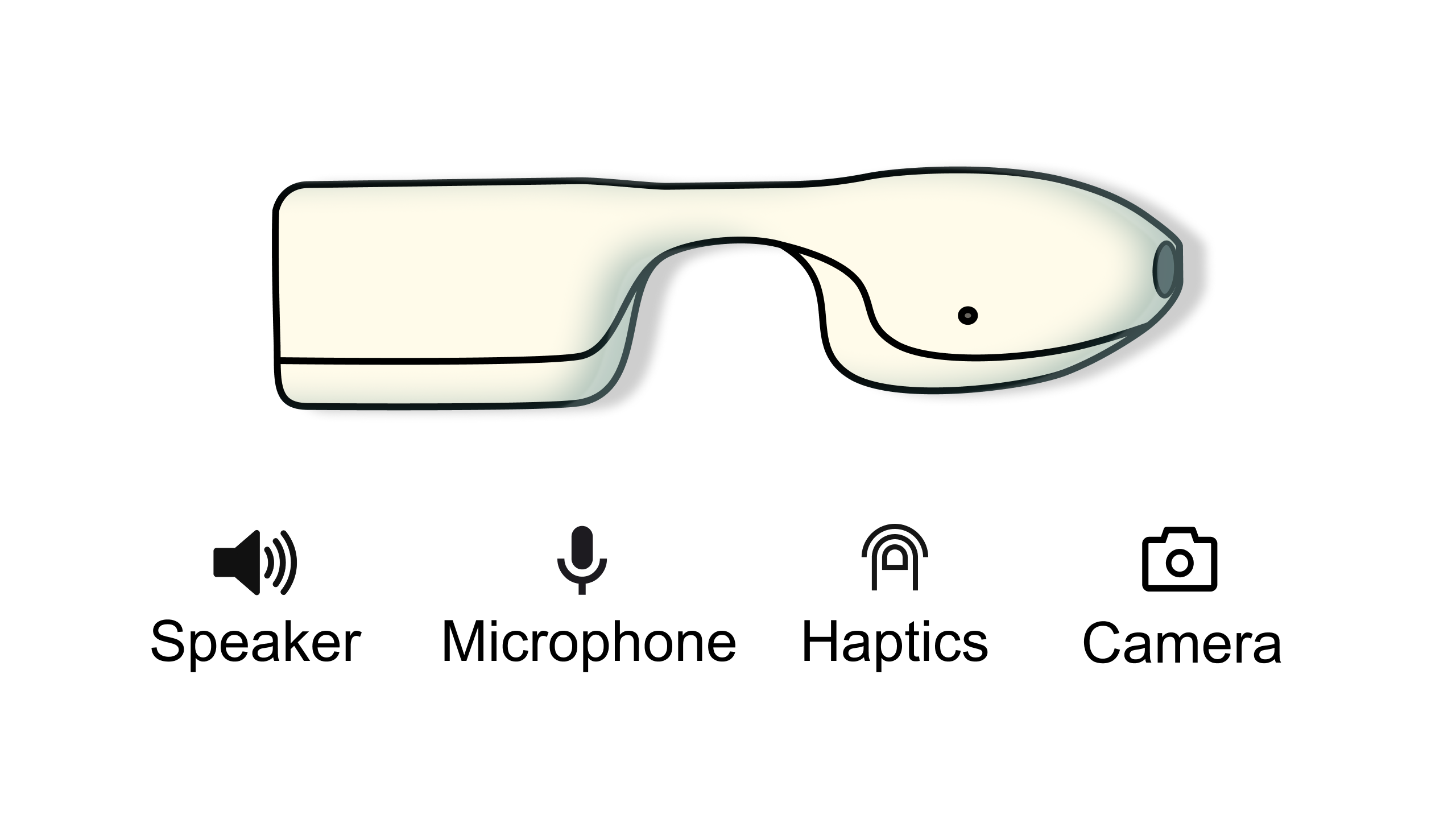
The device consists of a microphone, camera, speaker, Force Sensitive Resistor (FSR), haptic motor, and UFL antenna. A single press captures a photo; press-and-hold initiates a voice query, with haptic feedback communicating system state.
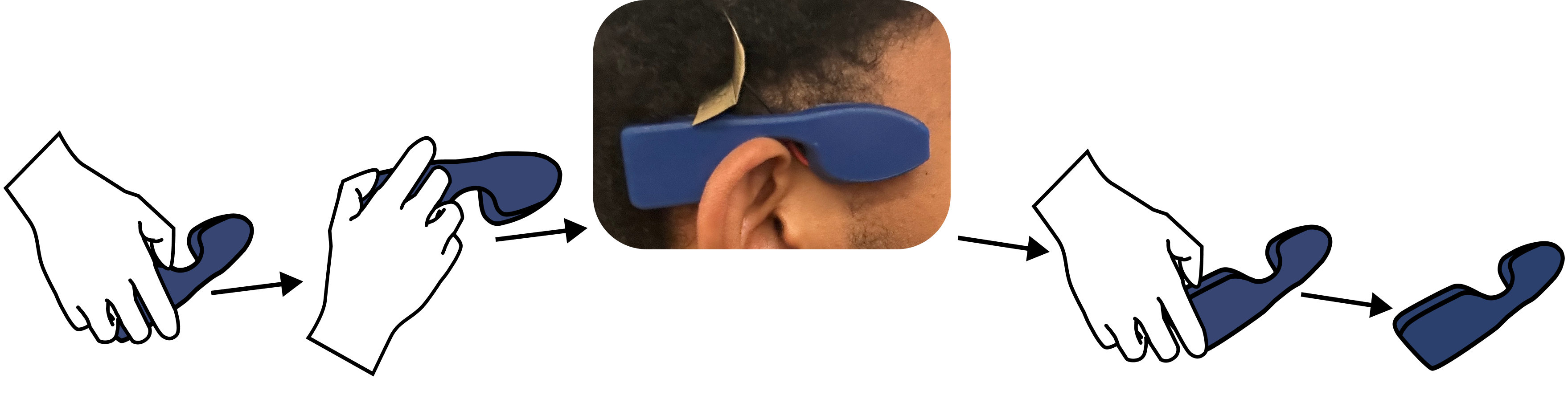
Wearing the device marks the beginning of an assistance episode; removing it marks the end. The form factor itself supports the episodic model; put it on when you need it and put it away when you don't.
A deliberate trigger separates passive wearing from active assistance. A single press captures visual context; press-and-hold initiates a voice query, reducing ambiguity about when the system is listening.
Haptic and audio cues communicate system state, making the boundary between active and inactive assistance legible without requiring visual attention from the user.
We conducted an exploratory study in two tasks — reading/studying and whiteboarding/brainstorming — to understand how episodic boundaries shape user experience in practice.
Participants were instructed to treat wearing as the start of an episode and removal as its end, and were encouraged to invoke assistance whenever they wanted clarification or support. Post-session surveys and open-ended reflections were collected to capture perceptions of agency, flow, and social comfort.
Participants did not consistently interpret wearing the device as the beginning of an episode. Users sought haptic or audio confirmation to clarify activation. In contrast, removing the device was perceived as a clear and definitive end to interaction.
Users valued being in control of when assistance was invoked, with the majority preferring to engage the device only at selected moments rather than continuously. Voice interaction felt natural, without requiring a shift in attention.
Despite showing conceptual promise, the device was experienced as practically fragile. Sensing failures and the effort required to invoke assistance disrupted flow, revealing that episodic interaction introduces new overhead when sensing reliability is imperfect. This overhead was partially mitigated by opting for a physical boundary (pressing the side of the device) rather than using wake word activation, though this is still not without friction.
Episodic use reframes the challenges of wearable AI devices, trading the risks of always-on systems for the comfort of explicit boundaries. However, participants expressed a desire for proactive assistance as well. Balancing the tradeoffs between proactive and intentionally invoked assistance remains a challenge.